If I loved you less, I might be able to talk about it more
George Knightley (Emma)
Of all Jane Austen’s major novels, Emma stands out as the clearest example of her distinct style, which utilizes free indirect speech, a method she helped popularize. Though Emma was written in third-person, the narrative was designed to focus on the thoughts and feelings of Emma, our protagonist, and the society of Highbury, the setting of the novel, was described through the lens of our female lead. Austen wanted to make Emma to be as unlikable as possible, but at the same time, Austen managed to trick us into believing almost everything Emma said to justify her self-serving actions. By merging Emma’s inner thoughts and the lines of the story-teller, Jane Austen gave us a reason to sympathize with a character that would have secured every reader’s hate, had the novel been executed differently.
Emma, like many other novels written by Jane Austen, serves as a moral precaution for her readers. In this case, the novel sets out to condemn Emma, who has all the qualities a “handsome, clever, and rich” woman could have, vanity, selfishness, and thoughtlessness. Apart from Emma, the novel also introduces other compelling characters, some of whom share Emma’s bad personality traits, while others demonstrate a strong moral compass. Through each character and his or her distinct personality, background and interactions with others, the novel gives us a glimpse of how one’s immediate surrounding affects that person’s character as well as teaches us crucial lessons about life and relationships.
Upon closing the book, readers may find that, among other human flaws demonstrated in the story, vanity is particularly targeted and decried by the novel. However, in this post, I would like to defense Emma Woodhouse and her vanity, for I strongly believe that Emma isn’t inherently bad and her environment is part of the reason why she acts so foolishly. Born into wealth and high status, Emma has had no equal in terms of talent and intellect, with the exception of Mr. Knightley, for most of her life in Highbury. Every one of her acquaintance looks up to her as a role model, who is caring to her friends and generous to the poor. She is beautiful, charming and witty. The people of her neighborhood praise her whenever they see her and go to great lengths to earn her compliments. Emma knows that she is special and confidently places herself above her company. Her father and governess exercise no restraints on her arrogance while her older sister inferior skills in almost everything only add to her lack of humility. Nevertheless, there is no denying that it is Emma herself who decides to persuade Harriet into rejecting such a deserving man like Robert Martin or humiliate the poor Ms. Bates, who, as Mr. Knightley describes, “has sunk from the comfort she was born to”. Emma has no one but herself to blame for her wrong-doings. Fortunately for her, she, as mistress of herself, also holds the power to redirect herself and change for the better.
Just like Emma, Jane Fairfax’s character is also largely shaped by her circumstance, but in a very different way. By the time we first met Jane, this poor orphaned girl had already spent most of her childhood under the care of Colonel Campbell, a longtime friend of her father. Understanding her position as the receiver of everybody’s charity, Jane unconsciously and habitually places herself below others in most of her interactions. Her shy and timid personality lacks an openness that Emma possesses, and that could cost Jane many valuable relationships with her neighbors. However, her situation also has a positive impact on her. To escape the charity that some people has forced on her, either due to their compassion or their needs to present themselves as superior people (like Mrs. Elton), Jane works hard and is an extremely accomplished woman, with a promising career as a governess (this is notable despite the fact that she eventually marries Frank Churchill, a very rich man, and no longer needs to work). The story of Jane teaches us about the many sides to people’s generosity and the need to express ourselves openly and honestly in order to form strong connections with others.
Moving to the hero of the story, Mr. Knightley, we really need to appreciate his position as the most thoughtful and compassionate person in the entire novel. Like most other Austen’s heroes, Mr. Knightley isn’t perfect. Though he is the least flashy of all Austen’s leading man, he appears as one of the most old-fashioned among them. When his interest is involved, Mr. Knightley can make unwise or biased judgments, even though, admittedly, such an occasion is quite rare. Mr. Knightley definitely has his flaws; nevertheless, he stands out as a model of maturity and moderation, with more lessons for readers than almost any other character that Austen ever created. One of the most significant things he shows us comes from his relationship with Emma, with which he proves that couples should be good friends before they are lovers. It took Mr. Knightley more than twenty years as Emma’s valuable friend for him to realize his feelings for her. During that incredibly long time, he learned to see through all of Emma’s actions. Now, after marrying her, he is still her friend, first and foremost, understanding her better than anyone else and knowing all her strengths and her failings. He always speaks his most truthful opinions of her, hoping that his brutal honesty will help her grow. If anyone can live with Emma’s childishness, it must be Mr. Knightley. If anyone can change Emma for the better, it must be Mr. Knightley. Therefore, though he claims to be a very indifferent lover, he is the perfect match for Emma. Their hinted happy every after at the end of the novel further strengthens the idea of strong friendship equals strong life-long partnership.
Though Mr. Knightley can capture Emma’s heart without doing so much as to reduce the number of his argument with her, another man, Mr. Elton, can’t win her hand even with his relentless pursuing. Through the case of Philip Elton, the novel advises us, the readers, to be wise and careful in choosing our acquaintances, friends and most importantly, spouses. Mr. Elton is a fine young man on the outlook, a vicar and sadly, a social climber. Undeniably, Emma is his perfect target, an attractive, rich and well-educated young woman. He flatters her ideas, compliments on her artworks and even goes to London to have her drawing framed. When Emma rejects him, he immediately looks for another woman with a sizable dowry. After marrying the pompous Miss Hawkins, he chooses to distant himself from his friends in Highbury. Though he still engages in social gatherings with his wife, he mostly follows her around to attend to her sense of pride. In every Austen’s novel or in the real world, opportunists like Mr. Elton are rarely rewarded with a satisfying end. He is in misery, forever trapped with a woman he can’t respect.
The last male character that we need to look into deeper is Frank Churchill, the only person Mr. Knightley envies. As the long-awaited son of the kind Mr. Weston, Mr. Churchill is introduced to the society of Highbury as the most estimable young man. However, despite his given name, the man is nothing but frank. Fearing that his aunt, who is also his adopter, won’t approve of his engagement with Jane, Mr. Churchill showers Emma with attention, pretending to be interested in her. Though Emma doesn’t fall for him, Jane is terribly hurt and almost decides to break off her engagement with him to become a governess. Through Mr. Churchill, the novel doesn’t just teaches us how detrimental deception could be, it also shows us that gestures of inconsiderate generosity can be worse than doing nothing. When Mr. Churchill secretly sends a piano forte to Jane’s cramped and tiny home, he makes her the center of attention and gossip. The piano is too big for any room in the house and too valuable that Jane felt burdensome. Frank has to pay for his thoughtlessness, he nearly loses Jane. However, one could argue that the novel is still very merciful to him, for everyone forgives him so easily, with the exception of Mr. Knightley, who half-jokingly claims to envy Mr. Churchill’s good fortune.
Each character in Emma represents a different type of people that Austen either wanted to praise or condemn. With a relatively small cast, Emma manages to create a vibrant story full of intriguing lessons and sarcastic takes on the social life of the landed gentry in Regency England.
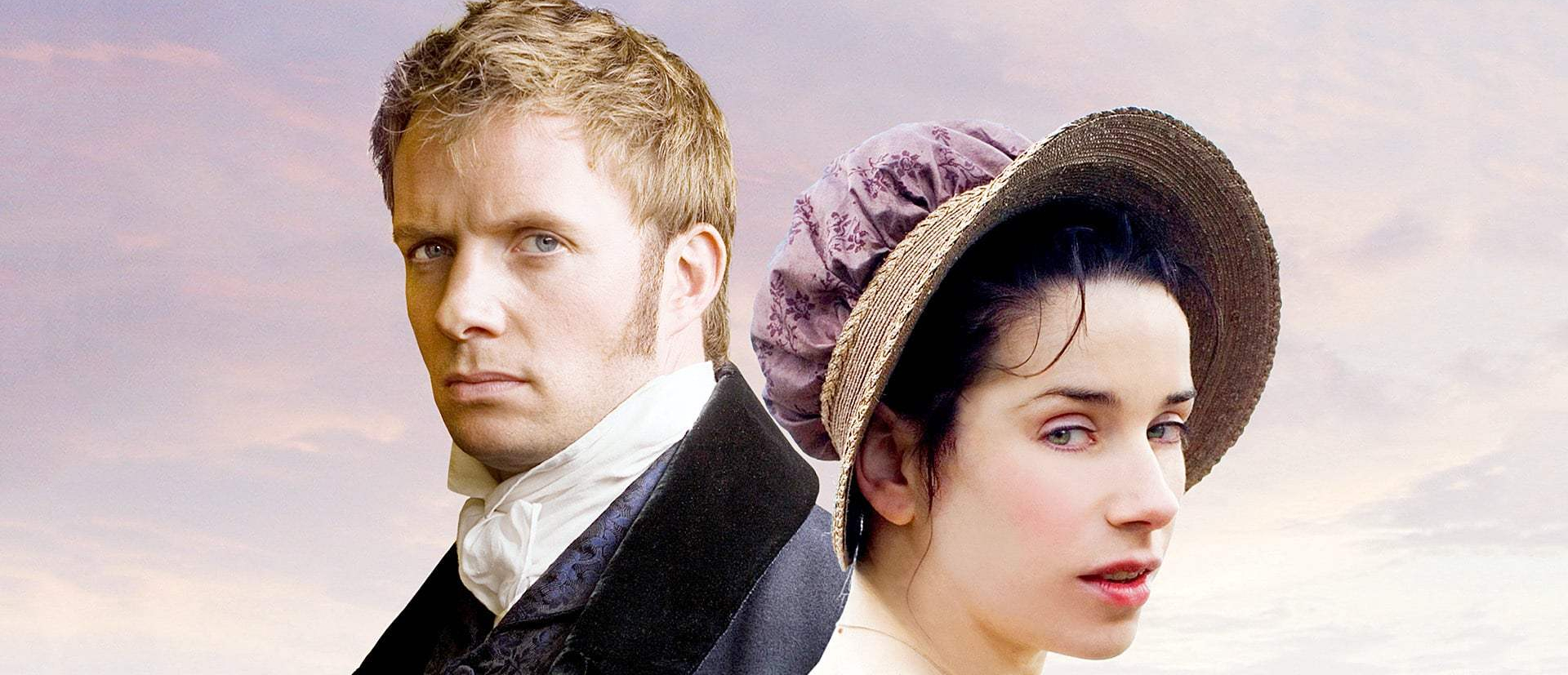
My next post is going to be about Persuasion, a novel with a melancholic touch rarely seen in Austen’s works. Sadly, this novel (like many other great novels) suffer from a lack of a good movie or TV (or any kind of) adaption. Some adaptations in the past were lovely, but for me, they couldn’t really capture the spirit of Anne Elliot, the female lead. Below is a photo from the 2007 movie adaptation.
 A sleepy conscience